Monday, 6 January 2014

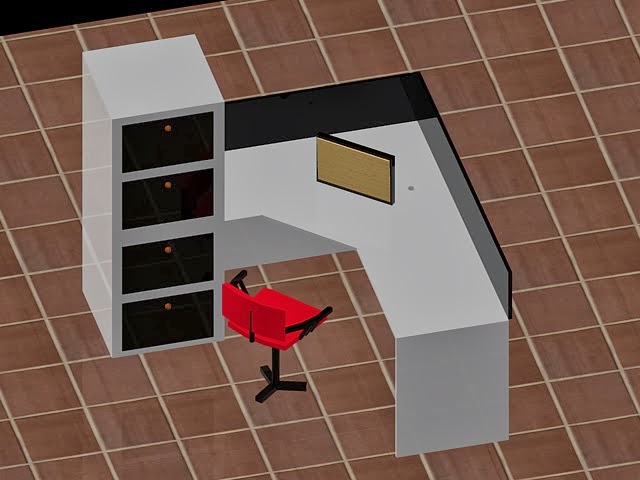
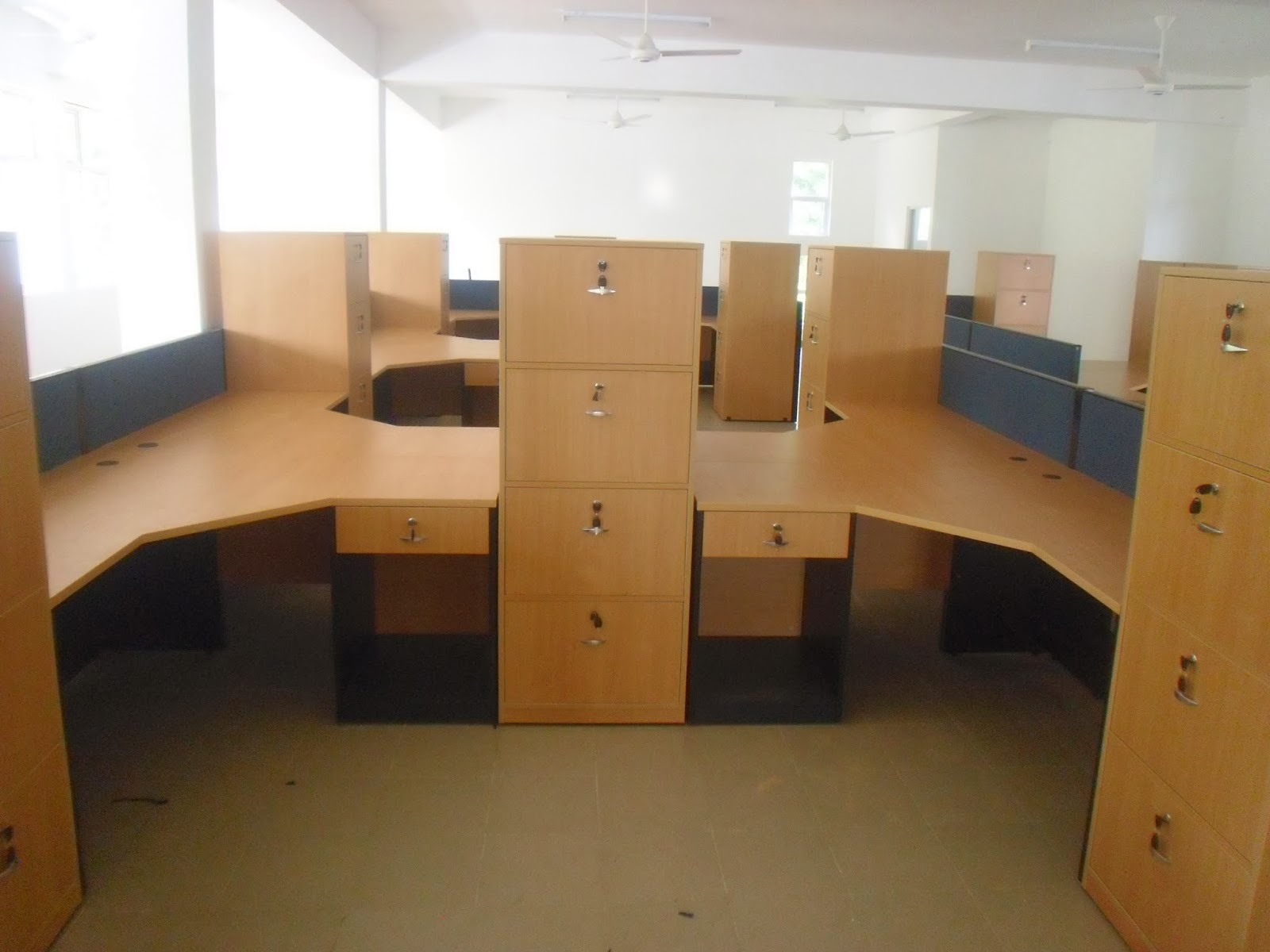
NEW OFFICE TABLE DESIGN
PLAN


SAMPLE


Saturday, 16 March 2013

SLAB ROOF HOME

GROUND FLOOR-2ROOM,DINING,LIVING, KITCHEN, BATH & TOILET, CAR PORCH,

FRONT ELEVATION
SIDE ELEVATION
3D ELEVATION 


Tuesday, 14 August 2012

2012/08 NEW DESIGN

FRONT ELEVATION


GROUND FLOOR 03 BED ROOM 01 TOILET & BATH ROOM LIVING DINING KITCHEN OPEN VERANDAHA


FIRST FLOOR 02 BED ROOM LIVING 01 TOILET & BATH ROOM BALCONY

Tuesday, 27 March 2012

Rococo Architecture • 1725-1775

Rococo Architecture • 1725-1775
Rococo artists reigned in the weighty drama of Baroque but retained its curves and elaborate ornament, resulting in a gentle, playful style typified by asymmetrical decoration and pastel colours. Most Rococo art was centred in France (the birthplace of the style), but Rococo architecture culminated in Austria and southern Germany. The style flourished especially in the form of churches.

Ottobeuren Basilika
Basilika Vierzehnheiligen

Late Baroque Architecture • 1660-1725

Late Baroque Architecture 1660-1725

The Late Baroque era marks the ascent of France as the heart of Western culture. Baroque art of France (and northern Europe generally) tends to be restrained, such that it can be described as a classical-Baroque compromise. The most striking element of French Baroque architecture is the double-sloped mansard roof.
 
The most famous Baroque structures of France are magnificent chateaus (although great Baroque churches were also constructed)

Invalides


Greatest of these chateaus is the Palace of Versailles. It was built mainly under Louis XIV, whose patronage of the arts helped propel France to the crest of Western culture.

The palace facade admirably demonstrates the classical-Baroque compromise of northern Europe. Although the walls are adorned with sculpted busts, they otherwise feature simple planar classicism. The mansard roof is more alive with Baroque elements, however, including a sinuous metal railing and rich moulding around the dormer windows. Versailles became the European model of palace architecture, inspiring similarly grand residences throughout the continent.

High Baroque Architecture • 1625-60

High Baroque Architecture • 1625-60
Gian Lorenzo Bernini is often upheld as both the greatest sculptor and architect of the Baroque style. Two of his most famous architectural works are found at St Peter's. One is the four-story baldachin that stands over the high altar.14 (A baldachin is an indoor canopy over an important object, such as an altar or a throne.) The other is the curving colonnades that frame St Peter's Square. Bernini's foremost building is likely Sant'Andrea al Quirinale (Saint Andrew's at the Quirinal), a small church. (The Quirinal is one of the hills of Rome.)


Baldachin at 
Saint Peter's.    


Saint Peter'
s Square.

Early Baroque Architecture • 1600-25

Early Baroque Architecture • 1600-25
The Baroque style of architecture first clearly emerged with Carlo Maderno, whose foremost work is the facade of St Peter's Basilica, Vatican City. Sculpted classicism is achieved via alternating pilasters and depressions.6 St Peter's as a whole is variously Late Renaissance and Baroque in style, as the building was constructed throughout both eras under many architects. (Note that this building makes extensive use of coffered ceilings. A "coffer" is a sunken panel in a ceiling, typically square or octagonal in shape.)

BAROQU

Introduction

Baroque art is characterized by dynamism (a strong sense of motion), which is augmented by extravagant effects (e.g. strong curves, rich decoration.)
Baroque Painting

The full-blown Baroque aesthetic ("full Baroque") was embraced in southern Western Europe. In northern Western Europe, a sort of classical-Baroque compromise ("restrained Baroque") was struck

The full Baroque aesthetic developed during the Early Baroque period (ca. 1600-25), then culminated during the High Baroque period (ca. 1625-60). Both periods were led by Italy. The restrained Baroque aesthetic culminated during the Late Baroque period (ca. 1660-1725). The Baroque age concluded with the French-born Rococo style (ca. 1725-75), in which the violence and drama of Baroque was quieted to a gentle, playful dynamism. The Late Baroque and Rococo periods were led by France.

Baroque architecture features curved and sculpted walls, vibrant colours and gilding, and the positioning of windows for dramatic lighting effects. The first of these characteristics is of particular note: whereas Renaissance architects coated flat surfaces in a classical veneer ("planar classicism"), Baroque architects freely moulded surfaces to achieve three-dimensional sculpted classicism.
.

And while the surface of a Renaissance building is typically neatly divided into sections (in accordance with classical clarity and order), a Baroque surface is treated as a continuous, textured whole.

Churches are the primary form of Baroque architecture in Italy, while chateaus (country mansions) are the outstanding Baroque works of France.

BAROQU & ROCOCO

Background Information.

Location in Western Art History

v    As illustrated above, Western art can be divided into eight major ages. Baroque art is the sixth age of Westernart.

v    The entire history of Western architecture is covered by the Timeline of Western Architecture. The leading regions of Western art through history are summarized at Core Regions of Western Art.

Overview
Summary of Outstanding Baroque Architecture
• Early Baroque ca. 1600-25 (Maderno (facade of St Peter's))
• High Baroque ca. 1625-60(Bernini (St Peter's baldachin and colonnades, Sant'Andrea al Quirinale))
• Late Baroque ca. 1660-1725 (chateaus (especially Versailles)
• Rococo ca. 1725-75 (churches (Austria/southern Germany))

Monday, 4 April 2011

FAMILY HOME

4 BED ROOM
LIVING
KITCHEN
BATH ROOM
2 LEVEL

Thursday, 10 February 2011

JASMIN (architectural design)


FRONT ELEVATIN

ROSE HOME(architectural design)

plan
FRONT ELEVATION

GROUND FLOOR PLAN
01.2 BED ROOM
02.LIVING
03.DINING
04.KITCHEN
05.BATH ROOM

FIRST FLOOR PLAN
01.01 BED ROOM
02. VERANDAH

Tuesday, 8 February 2011

DETAIL OF RUBBLE FOUNDATION


3/4"  THICK  EX.  PLASTER
9" THICK BRICK  WALL
PLINTH  PLASTER
2" THK.  LEAN  CONCRETE  SCREAD
1/2"  THICK   IN  PLASTER
4"  HIGH  SKIRTING
BRICK   PAVED  &  CT.  RENDED  FLOOR
RENDOM RUBBLE  MASONRY  WORK
DRY  EARTH  FILLING

DETAIL OF STAIR CASE

9"x9" R.C.C.BEAM
4" TK. LANDING
4" TK. R.C.C.SLAB
ground leval 0'-0" top level 10'-0"

Monday, 24 January 2011

architectural design home 01

ful architectural design
FRONT ELEWATION
01.GROUND FLOOR DESING
*2 bed room
*living
*kitchen
*2 bath room
*car porch


02.FIRST FLOOR DESING
 *2 bed room
 * vharendha
 *bath room

AYURVEDIC MEDICINAL CENTER (architectural design)

FRONT ELEVATION
AYURVEDIC MEDICINAL CENTER
01.Nutrition Center ground floor plan
02.Sales Center ground floor plan
03.other construction
04.FLOOR AREA-495.29 sq.ft. + 1601.77 sp.ft
05.ful architectural design

PLAN

Friday, 21 January 2011

NEW HOME

NEW PLAN NEW PLAN

*3 BED ROOM
*1 LIVING
*1 DINING
*1 VERANDAH

Monday, 17 January 2011

LCD projector

An LCD projector is a type of video projector for displaying video, images or computer data on a screen or other flat surface. It is a modern analog of the slide projector or overhead projector. To display images, LCD (liquid crystal display) projectors typically send light from a Metal halide lamp through a prism that separates light to three poly silicon panels – one each for the red, green, and blue components of the video signal. As polarized light passes through the panels (combination of polarizer, LCD panel and analyzer), individual pixels can be opened to allow light to pass or closed to block the light. The combination of open and closed pixels can produce a wide range of colors and shades in the projected image.

Metal Halide lamps are used because they output an ideal color temperature and a broad spectrum of color. These lamps also have the ability to produce an extremely large amount of light within a small area: current projectors average about 2,000-15,000 ANSI lumens.

Other technologies, such as DLP and LCOS are also becoming more popular in modestly priced video projection.
From Wikipedia, the free encyclopedia

eBay

eBay Inc. is an American Internet company that manages eBay.com, an online auction and shopping website in which people and businesses buy and sell a broad variety of goods and services worldwide. Founded in 1995, eBay is one of the notable success stories of the dot-com bubble; it is now a multi-billion dollar business with operations localized in over thirty countries.[3][not in citation given] eBay expanded from its original "set-time" auction format to include "Buy It Now" standard shopping; shopping by UPC, ISBN, or other kind of SKU (via Half.com); online classified advertisements (via Kijiji or eBay Classifieds); online event ticket trading (via StubHub); online money transfers (via PayPal[4]) and other services.

From Wikipedia, the free encyclopedia

PayPal

PayPal is an e-commerce business allowing payments and money transfers to be made through the Internet. Online money transfers serve as electronic alternatives to traditional paper methods such as checks and money orders.

A PayPal account can be funded with an electronic debit from a bank account or by a credit card. The recipient of a PayPal transfer can either request a check from PayPal, establish their own PayPal deposit account or request a transfer to their bank account.

PayPal performs payment processing for online vendors, auction sites, and other commercial users, for which it charges a fee. It may also charge a fee for receiving money, proportional to the amount received. The fees depend on the currency used, the payment option used, the country of the sender, the country of the recipient, the amount sent and the recipient's account type.[2] In addition, eBay purchases made by credit card through PayPal may incur extra fees if the buyer and seller use different currencies.

On October 3, 2002, PayPal became a wholly-owned subsidiary of eBay.[3] Its corporate headquarters are in San Jose, California, United States at eBay's North First Street satellite office campus. The company also has significant operations in Omaha, Nebraska; Scottsdale, Arizona; and Austin, Texas in the U.S., Chennai, Dublin, Berlin and Tel-Aviv. As of July 2007, across Europe, PayPal also operates as a Luxembourg-based bank.

On March 17, 2010, PayPal entered into an agreement with China UnionPay (CUP), China's bankcard association, to allow Chinese consumers to use PayPal to shop online.[citation needed] PayPal is planning to expand its workforce in Asia to 2,000 by the end of the year 2010.

Between December 4–9, 2010, PayPal services were distrupted due to denial-of-service attacks organized by Anonymous in retaliation to PayPal's decision to freeze the account of WikiLeaks citing terms of use violations over the publication of leaked US diplomatic cables

From Wikipedia, the free encyclopedia